


U.S. Markets – Bottom Line
The Dow Jones Industrial Average made a closing high on May 7 and an intraday extreme on May 10. Both levels remain intact and the index has so far failed to confirm the new highs in the S&P 500 Index. Many citadels for investor speculation have already flamed out, such as meme stocks, bitcoin and other cryptocurrencies, electric vehicle shares and SPACs. The main U.S. stock indexes are next. The U.S. Treasury long bond started a bear market in March 2020. Short term, a countertrend rally from March 18, 2021 is at or close to an end. The next significant move will be a price decline to new lows and a comparable rise in yields. Gold traced out five waves down from $1916.91, the high on June 1. This pattern indicates the larger trend remains down and that trend should reassert itself after gold traces out a three-wave rally.
U.S. Chart Gallery
U.S. Stock Markets
By Steven Hochberg and Peter Kendall, Elliott Wave Financial Forecast EWFF)
In January, Global Market Perspective discussed an “intensifying, collective chant” calling for “A New Roaring ’20s.” Last month’s issue (p.8) included a collage of headlines that revealed a widespread belief that the U.S. economy is at the forefront of an economic boom. Now the chant is roaring as if it is 1929, but everyone thinks a boom has just started. On June 14, the Associated Press reported that the economic slowdown and pandemic restrictions of the past 15 months “have given way to dreams of a new era of frivolity and decadence. For some, it feels like a party. Summer and a soaring stock market have fueled predictions of a new Roaring Twenties.”
We also noted in January that many pundits seemed to believe that making “the claim in the exact same way and ever more vociferously will make it so.” In June, several voices attached a caveat to the 1920s analogy: “This time, [comedian] Bill Maher has suggested we do it without ‘the depression at the end of it.’” The mayor of our hometown Springfield, Massachusetts is convinced it will happen that way: “We’re heading into the Roaring Twenties without the stock market crash.” “The 1920s ended with a stock market slump and economic depression,” reported Reuters on June 14. “But economists believe policymakers have heeded lessons from the past.” In other words, the Roaring Twenties are ahead of us, and nothing bad will follow. Talk about optimism. As the Economy & Deflation section explains, in employing that optimism ever more aggressively, policymakers have all but assured that the next decade will be at least as nasty as the 1930s.
Elliott Wave Analysis
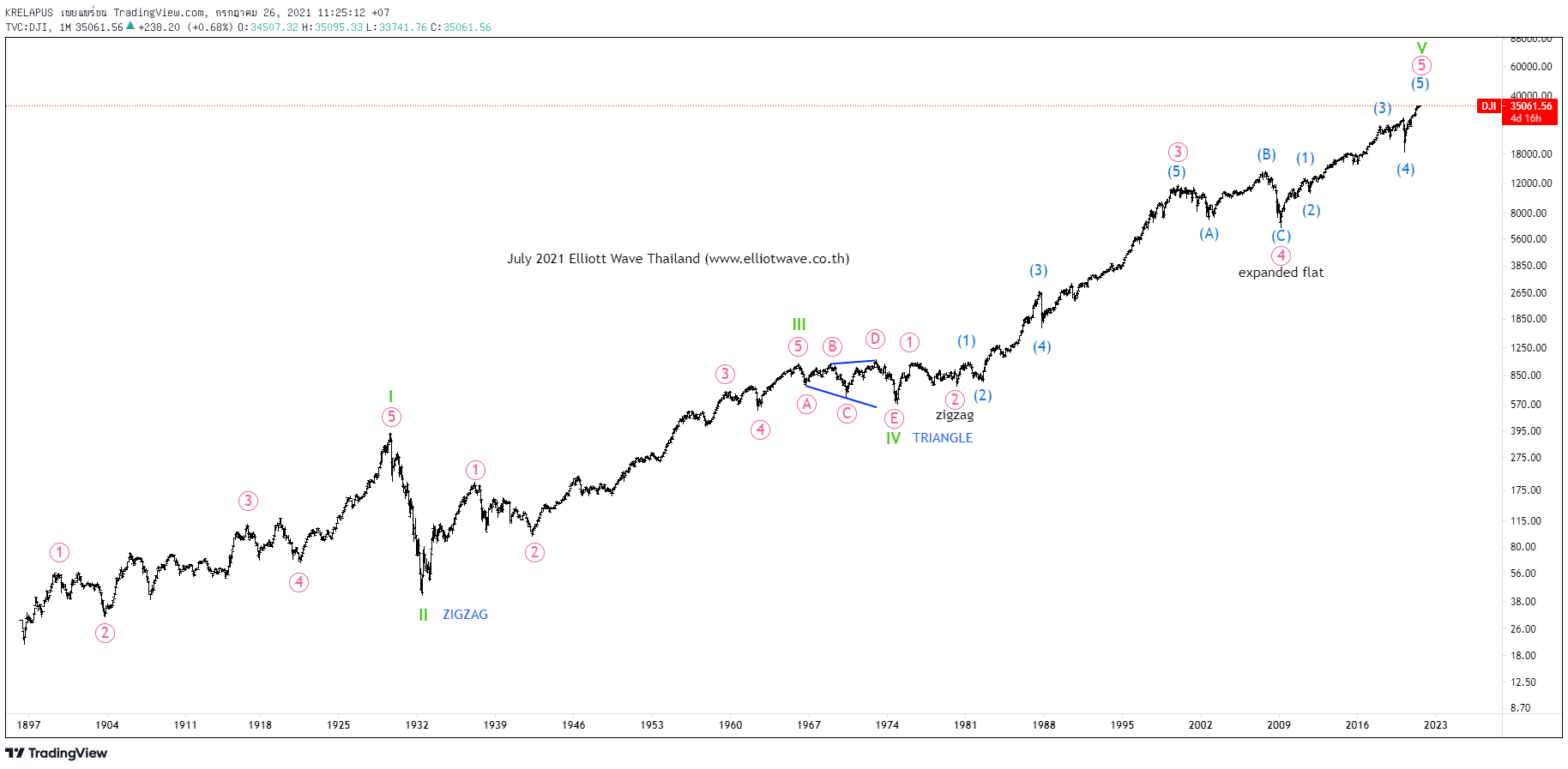
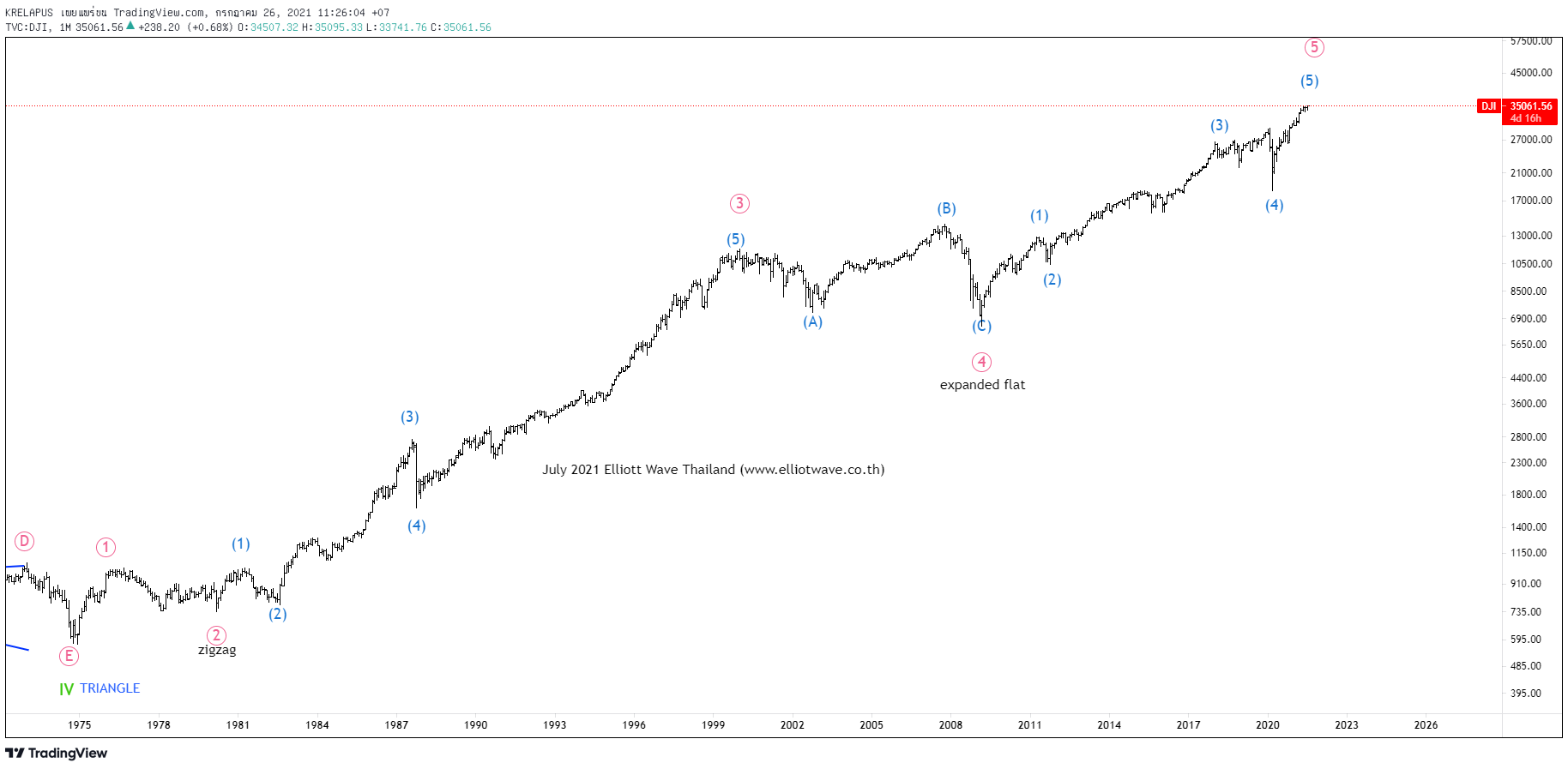
The May 2021 issue of The Elliott Wave Theorist updated a 2017 projection for a high in the Dow Jones Industrial Average of 34,389 and 35,032. So far, the daily closing high occurred at 34,777.76 on May 7, and the intraday extreme came at 35,091.56 on May 10. Both levels remain intact as we go to press.
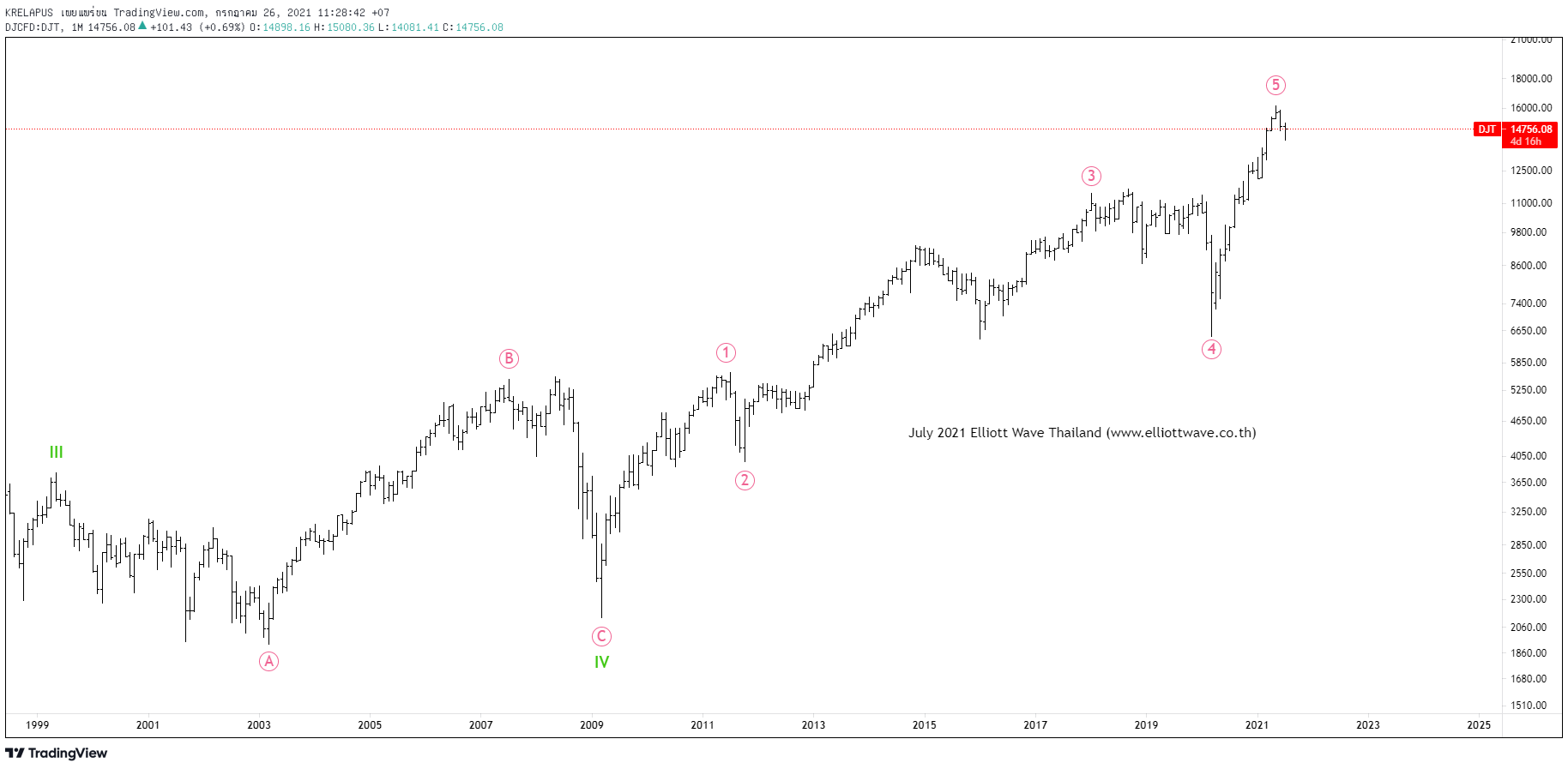
The Dow Jones Utility Average topped over 16 months ago, on February 18, 2020, while the Dow Jones Transportation Average made a high in conjunction with the Dow Industrials on May 7-10, 2021. This chart of the Dow Jones Transportation Average from 1997 to the present shows the wave structure since the top of Cycle wave III on May 12, 1999. Cycle wave IV took the form of a flat pattern (see text, p.45), which terminated on March 9, 2009. Cycle wave V traced out five Primary-degree waves to the May 2021 high. The complete five-wave rally pattern in the Dow Jones Transportation Average indicates a boom that’s ending, not starting.
Investor Psychology